ACTIVITY TASK MODULE 3 INFMNGT LECTURE
I. LEARNING TASKS
A. ENGAGE
Instruction: Based on your own understanding, kindly define the following
terminologies:
A. DATA DEFINITION LANGUAGE
- Data Definition Language (DDL) is a subset of SQL. It is a language for describing data and its relationships in a database. You can generate DDL in a script for database objects to: Keep a snapshot of the database structure. It is used to provide commands for defining relation schemes, deleting relations, and creating indices, among others.
.jpg)
B. INTERACTIVE DATA MANIPULATION LANGUAGE
- Interactive Data Manipulation Language is a collection of programming languages explicitly used to make changes to the database, such as: CRUD operations to create, read, update and delete data. Using INSERT, SELECT, UPDATE, and DELETE commands.
C. EMBEDDED DATA MANIPULATION LANGUAGE
- Embedded Data Manipulation Language is a method of combining the computing power of a programming language and the database manipulation capabilities of SQL. Embedded SQL statements are SQL statements written inline with the program source code, of the host language.
B. EXPLORE & EXPLAIN
Answer the following questions:
1. What are the basic sql expression?
- SELECT, FROM, WHERE

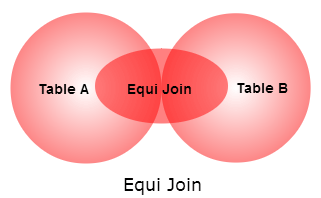
2. What is the difference between simple equijoin and natural join?
- An equijoin is a theta join using the equality operator. A natural join is an equijoin on attributes that have the same name in each relationship.
3. What are the different types of join?
- INNER JOIN, OUTER JOIN, and SELF JOIN
4. What are the different components of sql structure?
- Data Definition Language, Interactive Data Manipulation Language, Embedded Data Manipulation Language, View Definition, Authorization, Integrity, and Transaction Control.
5. What is the different between write and fetch transaction?
- The fetch transaction return the value for the column specified in DECLARE CURSOR as a single-row result set. SQL Copy while the write transaction is a function that modifies objects in a realm. Write transactions let you create, modify, or delete Realm objects. They handle operations in a single, idempotent update.
C. ELABORATE & EVALUATION
Answer the following questions: Identification
WHERE 1. Consists of a predicate that involves the attributes of the relations described
in the From clause.
SIMPLE EQUIJOIN 2. Combinations of all the relations.
Transaction 3. Is defined as a distinct activity within a computer system that reads or
modifies the content of a database.
SQL 4. A comprehensive language that has its own DDL and DML components.
SELECT 5. Is used to list the attributes needed to be included in the output of the
query. ate statements in query language.


Comments
Post a Comment